Daniel Roberts
On May 5, 2026

You may check out all the available trips and book one that suits you.
Continue Browsing TripsYour adventure begins with an early morning scenic flight from Kathmandu to Lukla, one of the most thrilling mountain airstrips in the world and the gateway to the Everest region. During the flight, you will enjoy spectacular views of the Himalayan landscape. After landing, you meet your trekking crew and begin your trek toward Phakding. The trail descends gently through beautiful villages, stone walls, and lush forests along the Dudh Koshi River. Passing traditional Sherpa settlements and prayer wheels, the short and pleasant trek helps you ease into the journey. Overnight stay in a teahouse in Phakding.
Today’s trek follows the Dudh Koshi River through pine forests and crosses several impressive suspension bridges decorated with colorful prayer flags. Along the trail you pass small villages such as Monjo, where you enter Sagarmatha National Park. After registration, the trail gradually climbs toward Namche Bazaar. The final ascent is a steady uphill walk that rewards you with your first distant views of Mount Everest if the weather is clear. Namche Bazaar is the vibrant trading hub of the Khumbu region with bakeries, shops, and stunning mountain views. Overnight stay in Namche Bazaar.
Acclimatization is essential for a successful high altitude trek. Today you spend the day exploring Namche Bazaar and its surroundings. A short hike to the Everest View Hotel offers incredible panoramic views of Everest, Lhotse, Ama Dablam, and other peaks. You may also visit the Sherpa Culture Museum or explore the lively local market. This day helps your body adjust to the altitude while allowing you to experience the culture and lifestyle of the Sherpa community. Overnight stay in Namche Bazaar.
Leaving Namche Bazaar, the trail follows a scenic ridge with breathtaking views of Everest, Nuptse, Lhotse, and Ama Dablam. The route descends through forests to the Dudh Koshi River before climbing steadily toward Tengboche. This village is famous for the historic Tengboche Monastery, the largest and most important monastery in the Khumbu region. Surrounded by towering Himalayan peaks, the setting of the monastery is truly spectacular. In the evening, you may have the opportunity to witness monks performing their daily prayers. Overnight stay in Tengboche.
Today the trail descends through rhododendron forests to Debuche and crosses the Imja Khola River. The path then gradually climbs through Pangboche village, one of the oldest Sherpa settlements in the region. As the landscape becomes more open and alpine, you continue toward Dingboche, a beautiful village surrounded by stone walls and vast mountain scenery. From here, the views of Ama Dablam are particularly stunning. Dingboche is an important stop for acclimatization before heading higher into the Everest region. Overnight stay in Dingboche.
Another acclimatization day helps prepare your body for higher altitudes. Today you can take a short hike to Nagarjun Hill or nearby viewpoints for breathtaking views of Makalu, Lhotse, and the surrounding Himalayan peaks. The hike also allows you to explore the dramatic landscapes of the Imja Valley. After the hike, you return to Dingboche and enjoy a relaxing afternoon surrounded by magnificent mountain scenery. Overnight stay in Dingboche.
The trail gradually ascends through alpine terrain toward the village of Dughla. From here, a steep climb brings you to the memorial site dedicated to climbers who lost their lives on Mount Everest. Continuing along the lateral moraine of the Khumbu Glacier, the trail offers dramatic views of surrounding peaks and rugged glacial landscapes. Eventually you reach Lobuche, a small settlement located beneath towering Himalayan mountains. Overnight stay in Lobuche.
This is one of the most exciting days of the trek. You begin with a hike to Gorak Shep, the last settlement before Everest Base Camp. After a short break, the trail continues along rocky glacial terrain to the legendary Everest Base Camp. Standing at the base of the world’s highest mountain is an unforgettable experience. During the climbing season you may see colorful expedition tents set up on the glacier. After spending time exploring and taking photos, you return to Gorak Shep for an overnight stay.
Early in the morning you hike up Kala Patthar, one of the best viewpoints in the Everest region. From the summit, you witness an incredible sunrise over Mount Everest, Nuptse, and the surrounding Himalayan giants. After enjoying the breathtaking scenery, you descend to Gorak Shep for breakfast before continuing the trek toward Dzongla. The trail follows rugged landscapes with impressive views of glaciers and mountains. Overnight stay in Dzongla.
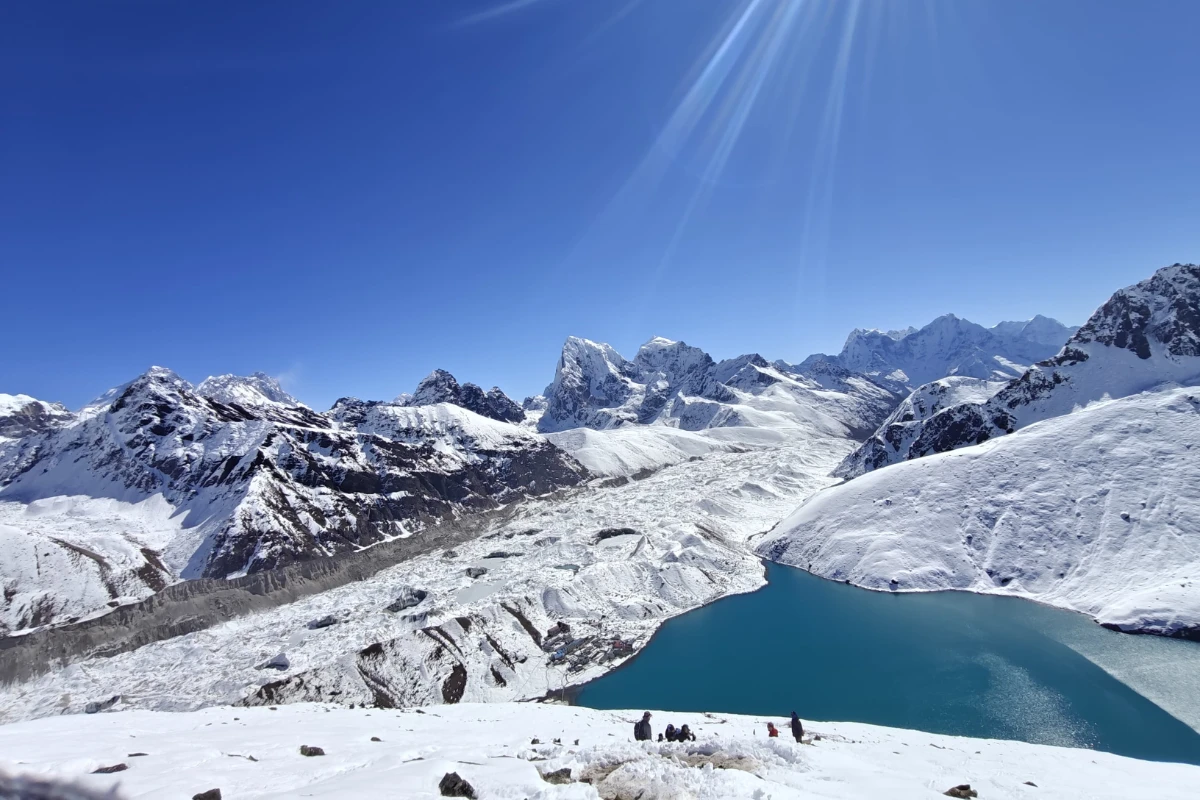
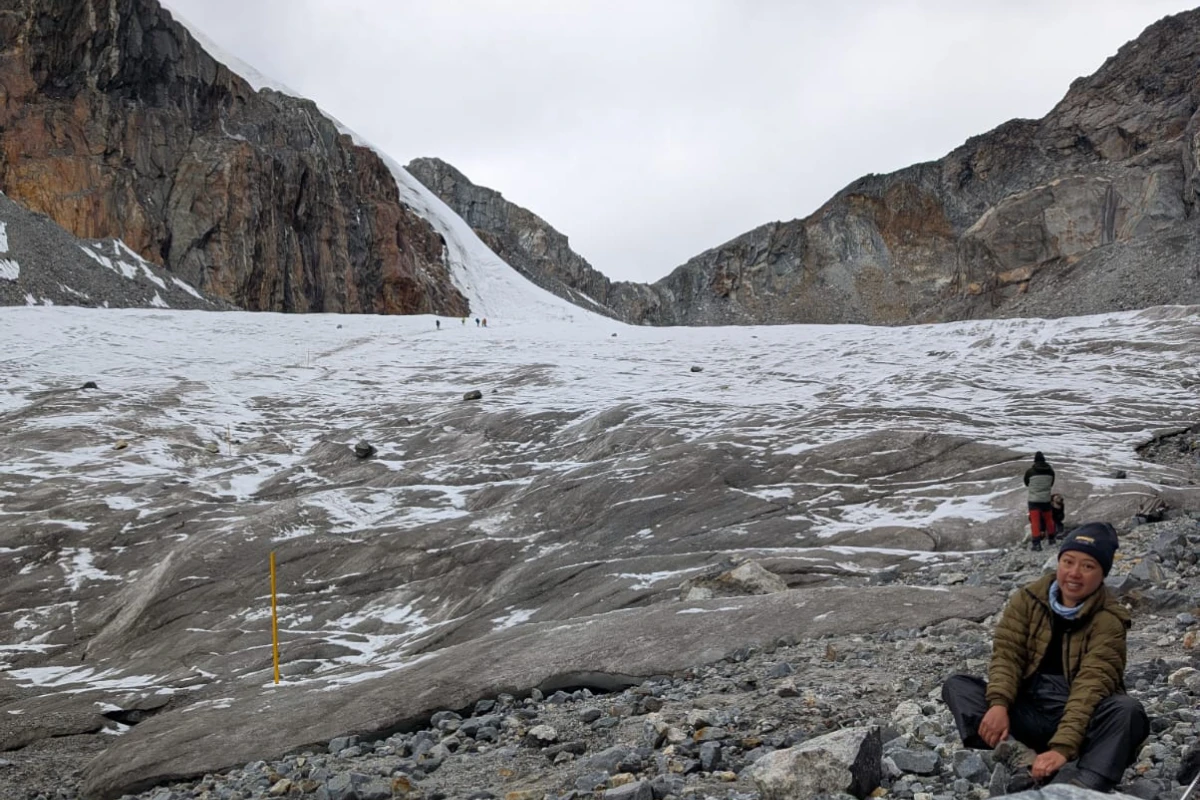
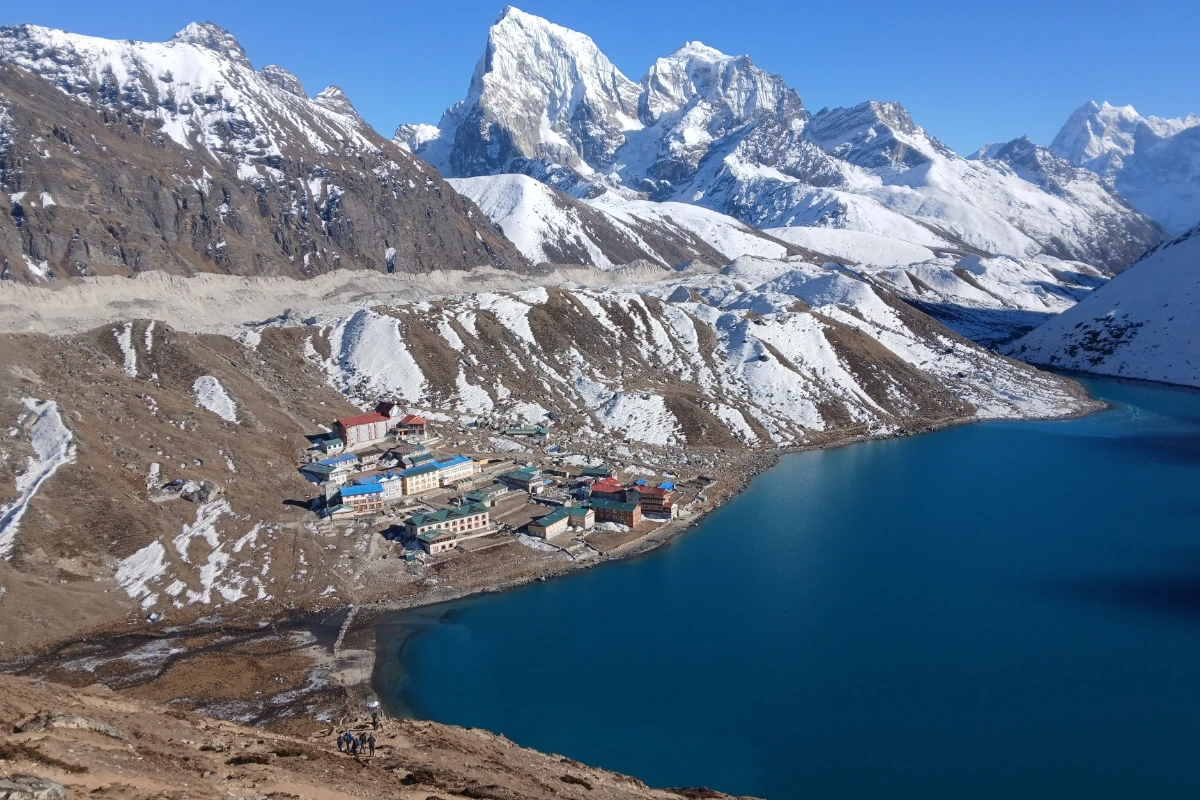
Today is one of the most adventurous and rewarding days of the trek as you cross the famous Cho La Pass at an altitude of 5,420 meters. The day begins early with a gradual climb from Dzongla toward the rocky slopes leading to the pass. The trail becomes steeper as you approach the top, with sections that may include snow, ice, and loose rocks depending on the season. Upon reaching the summit of Cho La Pass, you are rewarded with breathtaking views of the surrounding Himalayan peaks and glaciers. After spending some time enjoying the incredible scenery, the trail descends carefully along glacial terrain toward Thagnak and continues across the massive Ngozumpa Glacier. Eventually, you reach the stunning Gokyo Valley, where the beautiful turquoise Gokyo Lakes lie surrounded by towering mountains. Overnight stay in Gokyo.
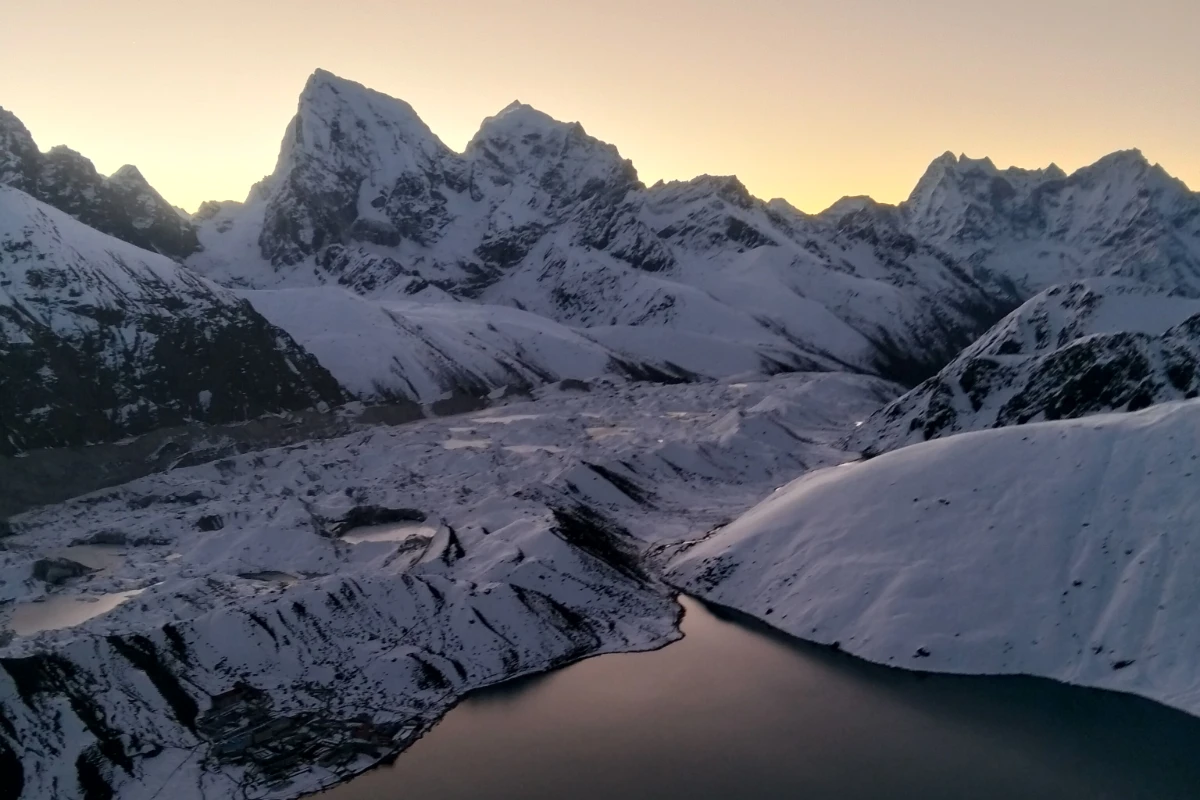
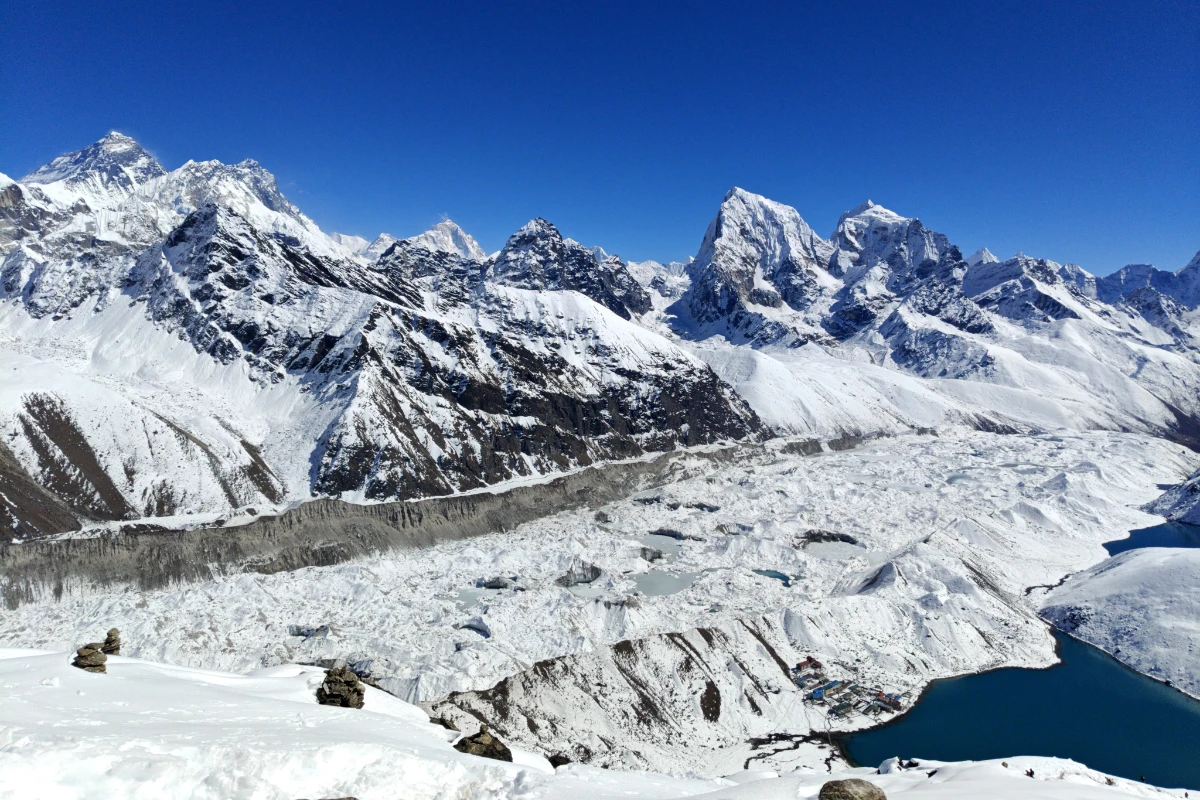
Early in the morning, you hike to the summit of Gokyo Ri, one of the most spectacular viewpoints in the Everest region. The climb is steep but rewarding, offering panoramic views of some of the world’s highest mountains including Everest, Lhotse, Makalu, and Cho Oyu. From the top, you can also admire the magnificent Ngozumpa Glacier and the chain of Gokyo Lakes below. After enjoying the sunrise and incredible mountain scenery, you return to Gokyo village for breakfast. The trek then continues downhill through alpine landscapes and small settlements as you make your way toward Dole. The descent provides a relaxing change after days at higher elevations. Overnight stay in Dole.
Today the trail descends further through beautiful rhododendron and pine forests. Passing through villages such as Machhermo and Luza, you continue trekking along scenic paths with occasional views of the surrounding peaks. As you approach Namche Bazaar, the lively atmosphere of the Sherpa capital returns. After several days in remote high-altitude terrain, Namche offers a comfortable place to rest, enjoy warm meals, and celebrate the successful crossing of Cho La Pass and exploration of the Gokyo Valley. Overnight stay in Namche Bazaar.
Your final trekking day follows the familiar trail along the Dudh Koshi River. The route includes a series of suspension bridges, forest trails, and small Sherpa villages as you descend gradually toward Lukla. Along the way you pass through Monjo and Phakding, enjoying the lush landscapes that contrast with the high alpine terrain visited earlier in the trek. Upon arrival in Lukla, you celebrate the completion of the incredible Cho La Pass and Everest region adventure with your trekking team. Overnight stay in Lukla.
In the morning, you board a scenic flight from Lukla back to Kathmandu. The short but spectacular flight offers one last aerial view of the Himalayan mountains. Upon arrival at Kathmandu airport, you are transferred to your hotel in the city. The rest of the day is free for relaxation, souvenir shopping, or exploring the vibrant streets of Kathmandu. In the evening, you can celebrate the successful completion of your unforgettable Cho La Pass Trek in the Everest region.
Meals during the Cho La Pass Trek play a vital role in maintaining energy and strength while trekking through the high Himalayan region. After long hours of walking on mountain trails, trekkers rely on warm, nutritious food served in traditional teahouses along the route. Most trekking packages include three meals a day—breakfast, lunch, and dinner—carefully prepared to provide the carbohydrates, proteins, and nutrients needed for high-altitude trekking.
One of the most common and highly recommended meals on the trail is dal bhat, a traditional Nepali dish consisting of steamed rice, lentil soup, seasonal vegetables, and pickles. It is widely favored by both trekkers and local guides because it provides balanced nutrition and long-lasting energy. Many teahouses offer unlimited refills of dal bhat, making it a satisfying and practical meal during demanding trekking days.
In addition to dal bhat, teahouse menus usually include a variety of international and local dishes such as fried rice, noodles, pasta, vegetable curries, potato dishes, omelets, pancakes, soups, and Tibetan-style momos (dumplings). Breakfast options often include porridge, eggs, toast, chapati, and pancakes served with tea or coffee. In popular trekking hubs like Namche Bazaar, trekkers can even enjoy baked treats such as apple pie, chocolate cake, and fresh pastries.
Vegetarian meals are widely available throughout the trek and are generally recommended at higher altitudes, as meat transportation and storage can be challenging in remote mountain areas. Although the menu choices become simpler as you gain elevation, the meals remain warm, filling, and comforting after a day on the trail.
Hot beverages are also an important part of the trekking experience. Black tea, milk tea, coffee, ginger tea, hot lemon, and garlic soup are commonly served in teahouses. Garlic soup is particularly popular among trekkers as it is believed to support acclimatization at high altitude. Overall, the food on the Cho La Pass Trek may be simple, but it provides the essential nutrition needed to sustain trekkers during their Himalayan adventure.
Accommodation during the Cho La Pass Trek is mainly provided in traditional Himalayan teahouses, which are small mountain lodges operated by local Sherpa families. These teahouses offer trekkers a comfortable and authentic experience while traveling through remote villages in the Everest region.
Rooms in teahouses are typically simple but cozy. Most rooms feature twin beds with mattresses, pillows, and blankets. Although rooms are usually unheated, the central dining hall is often warmed by a stove in the evenings. This communal dining space becomes the heart of the teahouse, where trekkers gather to enjoy meals, share stories, and relax after a day of trekking.
Bathroom facilities are usually shared and vary depending on the altitude and location. In lower villages such as Phakding and Namche Bazaar, some lodges offer private rooms, attached bathrooms, and hot showers. As the trek reaches higher elevations like Lobuche, Gorakshep, and Gokyo, facilities become more basic, but they remain adequate for trekkers exploring these remote mountain environments.
Staying in teahouses also supports the local economy, as most lodges are family-run businesses that depend heavily on trekking tourism. Beyond providing a place to sleep, teahouses allow trekkers to experience the warm hospitality of the Sherpa people and enjoy stunning mountain views right from their doorstep.
The Cho La Pass Trek reaches extreme altitudes, with the Cho La Pass itself standing at approximately 5,420 meters above sea level. At such elevations, oxygen levels decrease significantly, making proper acclimatization essential for a safe and enjoyable trekking experience.
A well-designed trekking itinerary includes gradual altitude gain and dedicated acclimatization days in key locations such as Namche Bazaar and Dingboche. These rest days help the body adapt to thinner air while reducing the risk of altitude sickness. Trekkers often follow the principle of “climb high, sleep low,” meaning they hike to higher viewpoints during the day and descend to lower elevations to spend the night.
Acclimatization days also provide opportunities to explore nearby attractions. Popular activities include hiking to the Everest View Hotel above Namche Bazaar, visiting Khumjung village, or climbing Gokyo Ri for breathtaking panoramic views of the Himalayas. Proper acclimatization significantly lowers the chances of altitude-related illnesses such as headaches, dizziness, nausea, and fatigue.
By taking time to adjust to the altitude, trekkers can safely enjoy the incredible landscapes and high mountain passes of the Everest region.
Safety is a crucial aspect of any high-altitude adventure, especially on challenging routes like the Cho La Pass Trek. The trek involves rugged terrain, unpredictable mountain weather, and remote environments, making experienced trekking support extremely valuable.
Professional trekking guides are highly knowledgeable about the region’s trails, weather conditions, and mountain safety procedures. Many guides are trained in wilderness first aid and altitude awareness, allowing them to monitor trekkers for signs of altitude sickness and respond appropriately if problems arise.
In case of emergencies, guides can coordinate evacuation procedures and communicate with rescue teams if necessary. Having a guide not only improves safety but also enriches the trekking experience, as they share insights about Sherpa culture, Buddhist traditions, local monasteries, and the history of mountaineering in the Everest region.
Porters also play an important role in supporting trekkers by carrying heavy equipment and luggage, allowing trekkers to focus on enjoying the journey.
The Cho La Pass Trek is considered moderately challenging to strenuous due to long trekking days, steep ascents, and high altitude conditions. Preparing physically before the trek greatly improves both comfort and success on the trail.
It is recommended to begin training at least six to eight weeks before the trek. Cardiovascular exercises such as hiking, running, cycling, swimming, and stair climbing help build endurance and lung capacity. Strength training for the legs, core, and lower back is equally important, as it improves stability and reduces fatigue during long days of trekking.
Exercises such as squats, lunges, step-ups, and planks are particularly beneficial for building trekking strength. Practicing hikes with a backpack also helps simulate real trekking conditions and prepares the body for carrying gear on uneven terrain.
With proper preparation, trekkers can fully enjoy the adventure while minimizing the risk of injuries and exhaustion.
Choosing the right season is essential for a successful Cho La Pass Trek. The best times to trek are during spring (March to May) and autumn (September to November) when weather conditions in the Everest region are generally stable and skies are clear.
Spring is known for blooming rhododendron forests, warmer temperatures, and vibrant mountain landscapes. It is also a popular season for Everest expeditions, so trekkers may witness mountaineering teams preparing for their summit attempts.
Autumn is considered the most popular trekking season due to its clear skies, crisp air, and outstanding visibility of the Himalayan peaks. The weather is usually dry and stable, providing ideal conditions for crossing high mountain passes such as Cho La.
Winter and monsoon seasons are less favorable due to heavy snowfall or rain, which can make trails more challenging and reduce visibility.
Packing the right equipment is crucial for staying comfortable and safe during the Cho La Pass Trek. Weather conditions in the Himalayas can change quickly, so having reliable gear makes a significant difference in the trekking experience.
A pair of high-quality trekking boots that are waterproof and well broken-in is one of the most important items. Layered clothing is recommended to adapt to changing temperatures. This includes thermal base layers, fleece jackets, a down jacket, waterproof outerwear, gloves, and warm hats.
A good sleeping bag rated for cold temperatures is essential for overnight stays at high-altitude villages. Other important items include trekking poles, UV-protection sunglasses, sunscreen, a headlamp, a reusable water bottle, and a small first aid kit.
Proper gear preparation ensures that trekkers remain comfortable, warm, and protected while trekking through the rugged landscapes of the Everest region.
Staying hydrated is extremely important while trekking at high altitude. The body tends to lose fluids more quickly in cold and dry mountain environments, making regular hydration essential for maintaining energy and supporting acclimatization.
Trekkers are generally advised to drink at least three to four liters of water each day during the trek. Clean drinking water is available at most teahouses along the route, but it should be treated before consumption using purification tablets, portable filters, or UV purification devices.
Although bottled water may be available in some villages, using refillable water bottles and purification methods is a more environmentally responsible choice. In addition to water, warm drinks such as ginger tea, herbal tea, hot lemon, and garlic soup help maintain hydration while keeping the body warm.
Proper hydration helps prevent fatigue, supports acclimatization, and keeps trekkers feeling strong throughout the journey.
Trekkers planning the Cho La Pass Trek must obtain a few essential permits to enter and explore the Everest region. These permits help regulate trekking activities and support conservation efforts in the area.
The first required permit is the Sagarmatha National Park Entry Permit, which allows trekkers to access the protected national park that includes Mount Everest and surrounding Himalayan ecosystems. This permit helps fund environmental protection and trail maintenance within the park.
Another required document is the Khumbu Pasang Lhamu Rural Municipality Permit, which replaced the former TIMS card for the Everest region. This permit is usually obtained in Lukla or Monjo at the entry checkpoint.
These permits are typically arranged by trekking agencies, making the process easy and convenient for trekkers.
One of the most rewarding aspects of the Cho La Pass Trek is the opportunity to experience the unique culture of the Sherpa people. The Everest region is deeply influenced by Tibetan Buddhism, which is reflected in the monasteries, prayer flags, mani walls, and chortens that line the trekking trails.
Villages such as Namche Bazaar, Pangboche, and Khumjung offer insights into the daily life of Sherpa communities. Trekkers often visit historic monasteries like Tengboche Monastery, where monks perform daily prayers and religious ceremonies.
The warmth and hospitality of the Sherpa people add a special dimension to the trekking journey. Their traditions, stories, and connection to the mountains create an unforgettable cultural experience alongside the breathtaking natural beauty of the Himalayas.
You can cancel the tour up to 60 days before the start date and receive a full refund.*

Hire a porter on the Chola Pass Trek to carry your luggage, making your high-altitude adventure easier and more comfortable (1 package = 1 porter)

Upgrade your trek stay with rooms featuring private toilets where available for added comfort and convenience. (1 package = 1 room)

The Everest Base Camp Trek was absolutely breathtaking from start to finish. The views of the Khumbu Icefall and surrounding peaks were unforgettable. The guides were professional and very supportive throughout the journey. I also did a short Annapurna side trek later, which was equally stunning in a different way. Highly recommended for anyone who loves high-altitude adventures.
Have a question before booking? Message us to learn more.
Login to use
Login to use